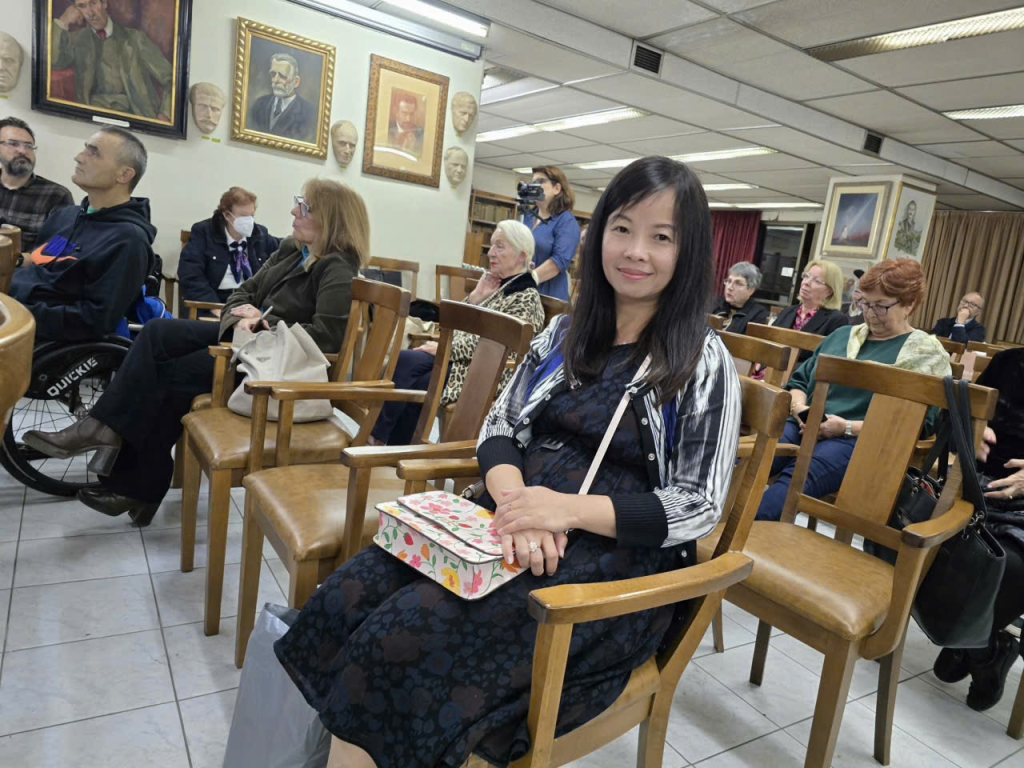
I recently had the honour of participating in an event hosted by the Hellenic Authors’ Society in Athens, Greece—an experience that unfolded against the profound backdrop of national remembrance. The gathering coincided with the anniversary of the 1973 Polytechnic uprising, a moment deeply rooted in Greece’s democratic history. Throughout the city, people paid tribute to the students who rose against the military dictatorship, laying flowers at the memorial and the gate that had been crushed by a tank. Under heightened security and with major roads and subway stations closed, Athens held its breath in collective reflection.
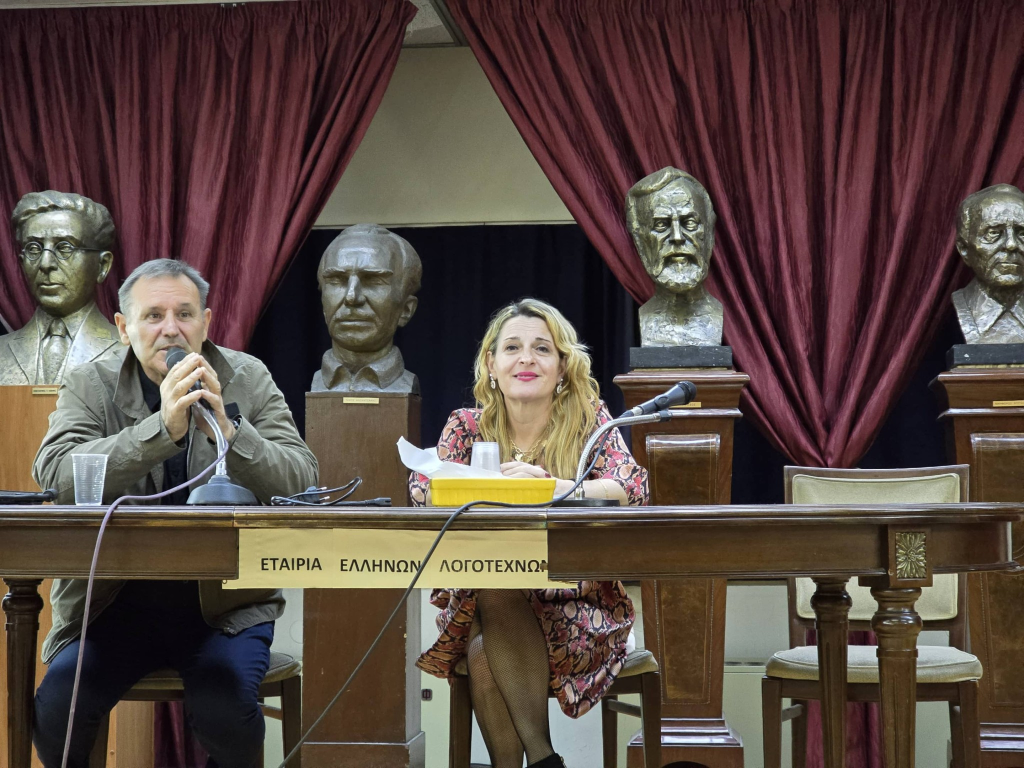
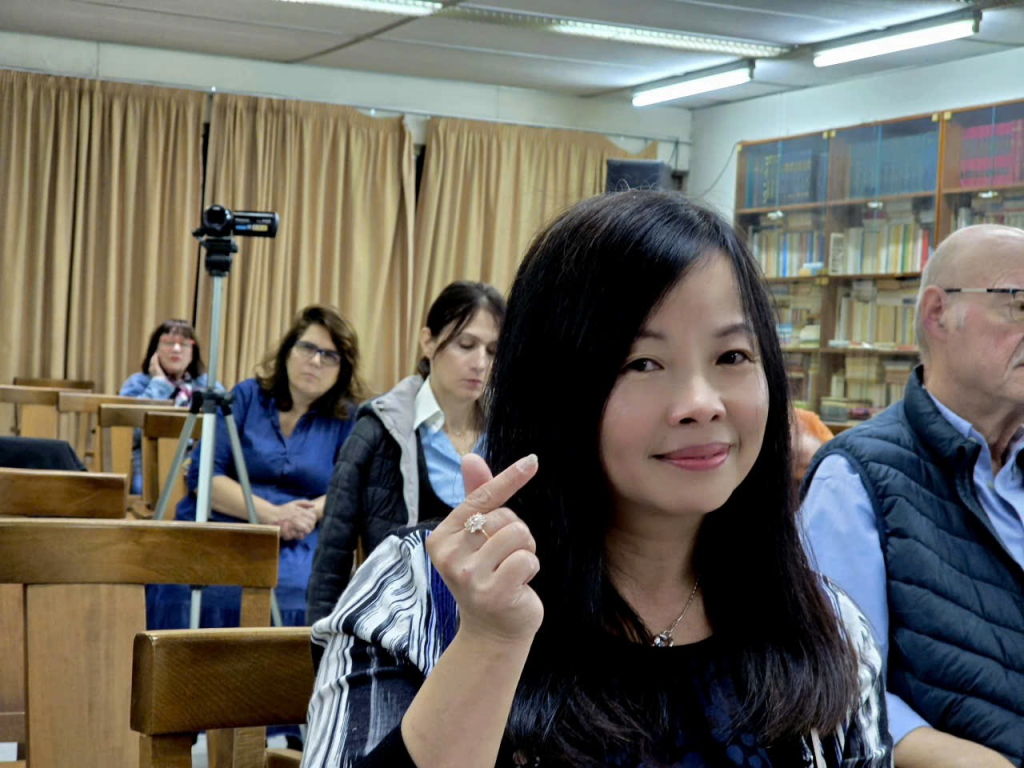
During the event, an entire hour was devoted to commemorating this historic uprising. The atmosphere was quiet but powerful, filled with a shared sense of responsibility to remember. People spoke softly about the young lives lost—at least twenty students and civilians whose courage helped reopen the path toward democracy. For someone like me, who does not understand Greek, I turned on Google Translate Live to follow along. To my surprise, I found myself deeply moved, enjoying every moment as the translations appeared and allowed me to witness the emotional current of the room.
After the hour of remembrance, the event shifted into a literary celebration. Writers and poets took turns delivering speeches, reflecting on the uprising’s connection to artistic freedom, and reciting poetry with a passion that resonated even across language barriers. Their voices carried a blend of sorrow and hope, reminding everyone that literature stands with memory, and that words themselves can become acts of resistance. It was a moment where history, literature, and humanity converged in the same breath.
The Hellenic Authors’ Society used this occasion not only to honour the past but also to reaffirm its mission: to present and support the work of its members both within Greece and abroad. Through concerts, readings, lectures, and collaborations, the Society strives to maintain active communication between Greek literature and the world, ensuring that voices shaped by the Greek experience remain present in global cultural dialogue.
Its origins are rooted in a powerful and unified proclamation. The founding authors came from different political, ideological, and aesthetic backgrounds, yet they all agreed on a set of fundamental principles. They believed in freedom of expression, diversity of ideas, and the absolute independence of intellectual creation from state, political, or economic influence. At the same time, they emphasised the duty of writers to actively participate in public life, especially concerning education and language, noting that the wounds of the past dictatorship required thoughtful vigilance.
Another central belief of the Society is the moral obligation to defend democracy and human rights. The members recognise a global responsibility to stand in solidarity with every writer, anywhere in the world, who is persecuted for their work or ideas. This solidarity forms the moral backbone of their collective identity, linking Greek literature with global struggles for justice and freedom.
Today, the Society continues its mission through clear goals: defending freedom of speech, spreading Greek literature internationally, protecting the legal and moral rights of authors, supporting writers facing censorship or prosecution, and participating actively in cultural policy. These commitments reflect an understanding that literature is not only an art but also a profession—and that its practitioners deserve protection, recognition, and respect.
As I left the event, I realised that I had witnessed more than a commemoration or a literary gathering. I had stepped into a living intersection of memory, creativity, and democratic values. Despite speaking a different language, I felt connected through poetry, through the shared silence of remembrance, and through the universal responsibility to protect freedom of expression. Athens welcomed me not only as a visitor but also as a witness to its enduring belief in the power of words.
Over the decades, the Hellenic Authors’ Society has embraced many towering figures in modern Greek literature. Among them are Nanos Valaoritis, the poet and novelist noted for his philosophical lyricism, and Miltos Sachtouris, a leading post-war poet and one of the Society’s founding members. Rhea Galanaki, a celebrated novelist and short-story writer, brings deep historical and cultural insight into her prose. Other important members include Vasilis Lampropoulos, a respected critic and novelist; Anastasis Vistonitis, who has published a rich body of poetry; and Panagiotis Kondylis, a philosopher and author whose work on political theory and social critique is widely studied. Figures such as Maria Sotiropoulou, Dido Sotiriou, and Nikos Xenios also enrich the Society’s ranks with their diverse literary contributions. Together, these writers illustrate the Society’s dedication to intellectual diversity, enduring tradition, and dynamic innovation.
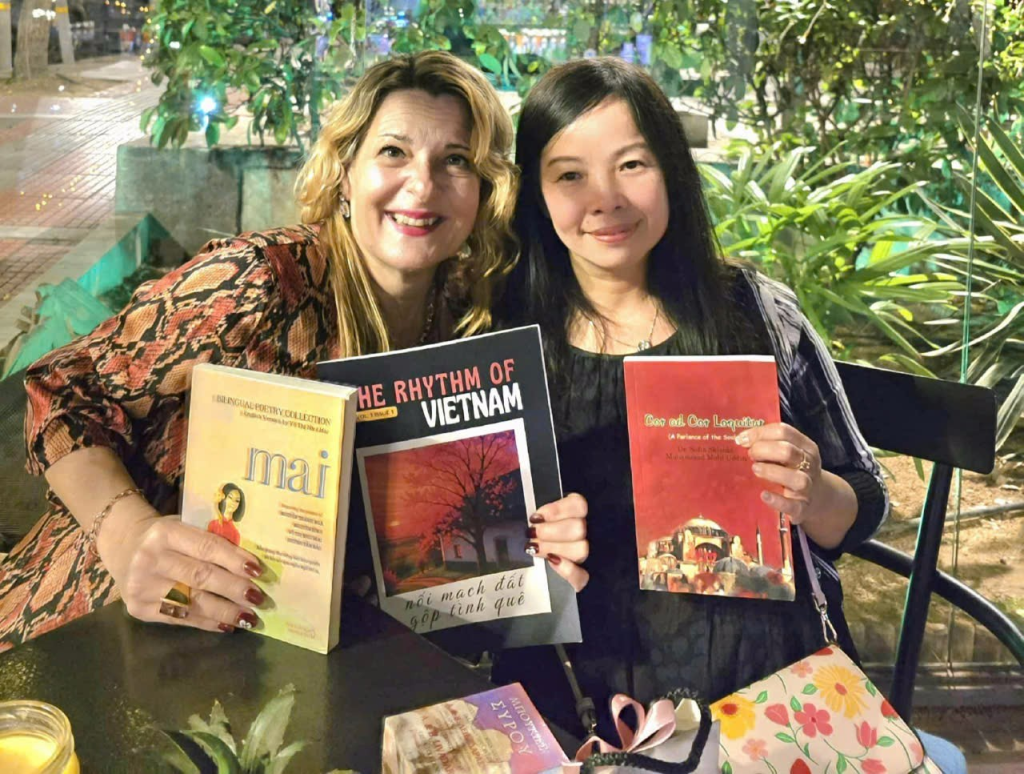
I feel extremely fortunate to have been invited to the event at the Hellenic Authors’ Society by Dr Sofia Skleida, a distinguished scholar and cultural ambassador born in Athens. She studied Philology at the National and Kapodistrian University of Athens, where she earned her BA, MA in Pedagogy, and PhD in Comparative Pedagogy, and she is currently a postdoctoral candidate in the Faculty of Theology at the same university. In addition to her academic achievements, she obtained certification in Braille writing and worked as a translator at the Greek Embassy in Italy. Sofia has extensive teaching experience, including teaching Greek as a foreign language to adults in the Greek Community of Rome, teaching Italian and Greek at the Italian School of Athens, and delivering lessons in Judicial Psychology-Psychiatry at the Faculty of Police Officers. Her scientific interests cover special education, school psychology, and both Ancient and Modern Greek literature, which she has explored through numerous seminars, conferences, and publications in Greek and international scientific journals, books, and conference papers. Recognized internationally, she served as ambassadress of Greek Culture with the Universum Academy in Switzerland and participates actively in the International Literary Organization Poets of the World, the International Literature Competition Universum, and several prestigious literary juries and cultural organizations. She has been awarded for her contributions to poetry and literature in Greece and abroad. Her poetic collections include Dream of Oasis (2014), translated into Italian in 2017, Neologisms, and Melismos, and her fairy tales include Geometroulides (2016) and The Kingdom of Joy (2018). Currently, her forthcoming works include In the Mediterranean, Poetic Reflections, Cappadocian Theological References in Handwritten Verses, The Teaching of Classical Languages in Italian Secondary Education, and Poetic Visions in Paintings. Attending this event was not only an honor but also a unique opportunity to meet and learn from such a multifaceted and accomplished cultural figure.
I felt very welcomed and happy as everyone greeted me with big smiles, and some authors who spoke English spent time chatting with me as well. I realized that language is not a barrier when it comes to poetry and writing, especially when meeting people who share the same passion for words. At the end of the meeting, I had the pleasure of gifting my book MAI to one of the members, the poet Πολυχρόνης Χρονόπουλος. I was also delighted to finally meet poet Σπύρος Ζαχαράτος, whom I had been friends with on Facebook for some time but had not met in person until now. I am also very grateful to poet and editor Agron Shele for introducing me to Sofia and connecting us, which made my experience at the event even more meaningful.